
Get to know The Golden Spice
The Indian Saffron
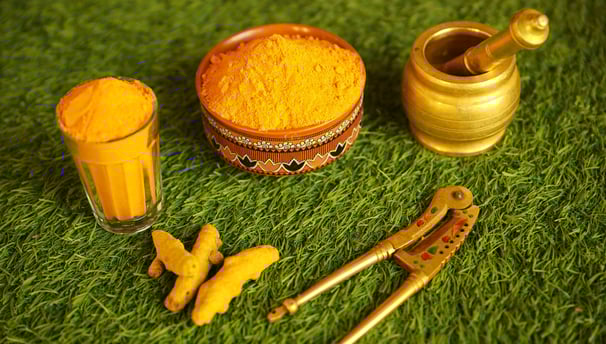
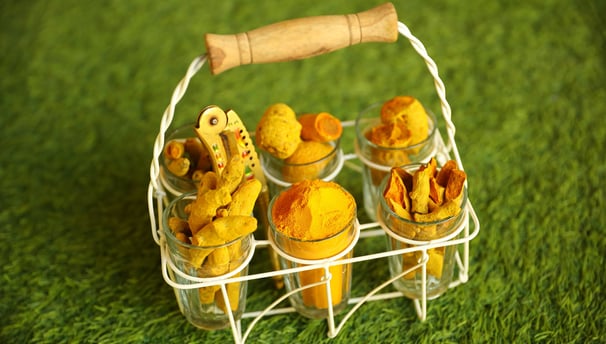
An incredibly forward-looking spice, turmeric remains a source of inspiration, knowledge, and relief. Celebrated as a marvel of spices, its roots trace back to the curcuma longa plant. It proudly carries the title of "Indian saffron" – a moniker earned not just from its widespread use, but also from the vivid hue provided by its abundant and vibrant curcumin content, painting it in a distinct shade of yellow.
The use of turmeric dates back to the Vedic age in India, where it was used both as a culinary spice and also as an item of ritual significance.


Uses and Health Benefits
This spice holds sacred value in Hinduism, gracing weddings and festivals. It's a health powerhouse, enhancing Indian dishes, including the famous Turmeric milk. Its antibacterial properties aid healing, while also serving as a natural food dye. A daily staple in South Asian cuisine, turmeric is more than just a spice—it's tradition and wellness combined.
Turmeric possesses antimicrobial qualities that promote internal healing when ingested and external recovery when applied. Its skin benefits lead to a radiant glow with regular use. Enhancing digestion and bolstering the immune system, turmeric's curcumin actively fights cancer cells, providing a robust shield of immunity.
Cultivation
Turmeric, a plant with multiple species, thrives in tropical climates. India takes the lead, producing almost the entire global turmeric supply, with its population consuming 80% of it. About a billion people worldwide incorporate turmeric into their daily routine. Indian turmeric stands out for its exceptional antibacterial and antimicrobial properties. The city of Nanded in Maharashtra, India, is a major global hub for turmeric production, earning it the names "yellow city" or "turmeric city."
Cultivating turmeric requires meticulous planning, starting with land preparation during pre-monsoon showers around April-May. Clayey, well-drained soil or sandy soil is suitable. Ridges and furrows are fashioned for planting rhizomes, typically harvested from the previous season. Turmeric thrives in 20 to 30 degrees Celsius temperatures and necessitates ample rainfall. Care and organic manure like neem cakes and cattle manure are crucial. Pests and diseases are monitored closely.
After 7 to 9 months of growth, signaled by browning leaves and stems, turmeric is ready for harvest. Post-harvest, a meticulous curing process unfolds. Rhizomes are boiled, sun-dried, boiled again until soft, and then sun-dried over 10 to 15 days, with protection from moisture. The final polishing stage ensures a smooth appearance, often involving power-operated polishing drums. The color of turmeric affects its pricing; therefore, turmeric powder is applied during the last phase of polishing. This detailed process culminates in dried, polished turmeric ready for the market.
A Magical Medicine
Traditional Ayurvedic Medicine
Turmeric has been a part of traditional healing for centuries, spanning the globe. Ayurvedic wisdom hails its diverse merits, from boosting body vigor and digestion to easing arthritis and dissolving gallstones. Many South Asian countries use it to heal cuts, burns, and as an antibacterial. For Indians, turmeric purifies blood and soothes skin alongside its Ayurvedic role. Today, it graces sunscreens and face creams, a testament to its versatility. In Ayurveda, turmeric remains a trusted remedy for respiratory woes and liver ailments, a beacon of holistic care.
Modern Medicine
Turmeric is valued for both disease prevention and treatment. Contemporary laboratory tests demonstrate its prowess as a robust antioxidant, anti-inflammatory, antimutagenic, antimicrobial, and anticancer substance. Employed in cooking and home remedies, turmeric showcases potent antioxidant qualities across various levels. It displays anticancer potential by restraining cell growth and prompting apoptosis in cancer cells. Turmeric's scope extends to addressing concerns like neuronal, cardiac, and kidney disorders, as well as combating depression. Notably, turmeric also exhibits a noteworthy capacity for wound healing.
Contact Us


Phone
Address
jbladda23@gmail.com
Mr Jayprakash Ladda +91 94220 50712
Jayprakash Balaprasad Ladda, Shop No. 5, APMC Complex, Near SBI, New Mondha, Nanded, Maharashtra, India - 431601
yladda3@gmail.com